How Current Mortgage Rates Influence California’s Real Estate Market
October 26, 2026
October 26, 2026
Image credit: Photo from Monstera Production (Pexels)
Mortgage rates play an important role in determining how much buyers can afford, how sellers price their properties, and how investors evaluate real estate opportunities. When borrowing costs increase, purchasing a home or financing an investment property becomes more expensive.
Understanding current interest rate trends can help buyers, sellers, investors, and real estate professionals make better-informed decisions.
As of October 16, 2026, the average 30-year fixed-rate mortgage stood at approximately 7.40%, while the average 15-year fixed-rate mortgage reached 6.71%. Both rates were higher than their levels a year earlier, reflecting continued pressure on borrowing costs.
The difference between these loan options goes beyond the interest rate. A 30-year mortgage spreads repayment over a longer period, generally producing lower monthly principal and interest payments. A 15-year mortgage typically requires higher monthly payments but allows borrowers to repay their debt sooner and pay substantially less interest over the life of the loan.
For prospective homeowners, the right mortgage depends on income, savings, long-term plans, and the ability to manage monthly payments. Buyers should compare the total cost of borrowing rather than choosing a loan based solely on its advertised rate.
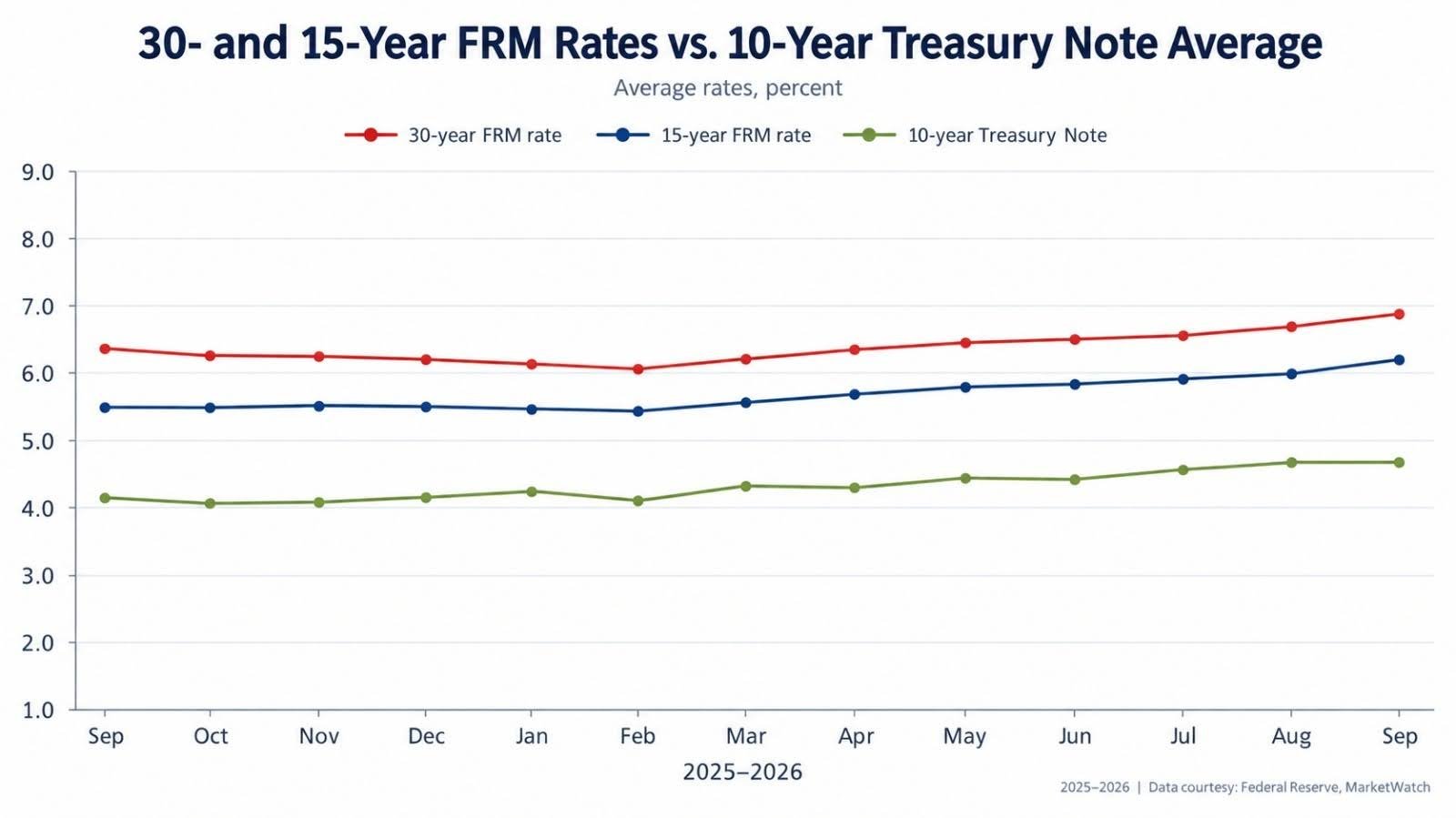
Mortgage rates are influenced by several economic factors, including inflation expectations, financial market conditions, and investor demand for government bonds. One particularly important indicator is the 10-year U.S. Treasury note yield.
On October 16, 2026, the 10-year Treasury yield was approximately 5.10%. Mortgage lenders generally charge rates above Treasury yields to account for additional risks and costs associated with home loans. The difference between these rates can change as market conditions and lender expectations evolve.
When Treasury yields rise, mortgage rates often move higher as well. Conversely, declining yields can create conditions that support lower mortgage rates, although the relationship is not automatic. Lenders also consider credit risk, funding costs, competition, and broader economic uncertainty.
Higher mortgage rates reduce purchasing power because borrowers must devote more money to interest and monthly loan payments. A buyer who qualified for a particular loan amount when rates were lower may no longer qualify for the same amount when borrowing costs increase.
Some buyers respond by looking for less expensive properties, increasing their down payments, or postponing their purchases. Others may explore different mortgage structures, but these alternatives require careful evaluation of their long-term costs and risks.
For real estate professionals, monitoring mortgage rate changes helps explain shifts in buyer activity and affordability. Advising clients requires more than tracking interest rates. Agents should also consider property prices, insurance premiums, property taxes, available inventory, and each buyer’s financial circumstances.

Image credit: Photo from Picas Joe (Pexels)
Rising financing costs can affect sellers by reducing the number of buyers who can comfortably afford their asking prices. When demand weakens, properties may take longer to sell, and sellers may need to adjust their expectations.
The relationship between mortgage rates and home prices is not always immediate. Local employment, housing supply, population changes, and neighborhood demand can influence prices independently of financing costs.
In California, sellers should evaluate recent comparable sales, current competition, and the financial limitations facing potential buyers before setting a listing price. Realistic pricing and careful preparation can help a property remain competitive in a market where buyers are more sensitive to monthly payments.
Interest rates also affect investors who purchase rental properties and other income-producing real estate. Higher borrowing costs can reduce monthly cash flow and make it more difficult for rental income to cover loan payments, maintenance, taxes, insurance, and other operating expenses.
Investors commonly use the capitalization rate, or cap rate, to evaluate a property's income relative to its value. When financing costs and required investment returns rise, buyers may demand stronger income performance before agreeing to a purchase price. This can place downward pressure on property values, although actual outcomes depend on rental demand, operating expenses, and local market conditions.
Before acquiring an investment property, investors should calculate expected net operating income, financing expenses, vacancy allowances, and potential repair costs. A property that appears attractive at one interest rate may produce very different returns when financing becomes more expensive.
Predicting the direction of mortgage rates is difficult. Inflation, economic growth, Treasury market movements, and Federal Reserve policy can all influence future borrowing conditions. Even when rates decline, home prices or competition among buyers may increase, offsetting some of the potential savings.
Rather than relying entirely on forecasts, buyers should determine what they can afford under current conditions. Comparing lenders, reviewing different loan terms, maintaining emergency savings, and avoiding excessive debt can help buyers prepare for changing market conditions.
Mortgage rates influence affordability, housing demand, seller expectations, and investment returns throughout California's real estate market.
Although higher borrowing costs can create challenges, they do not affect every buyer, seller, or property in the same way. Real estate decisions should be based on current market data, individual financial circumstances, and realistic long-term expectations.
By regularly reviewing mortgage rates, Treasury yields, property values, and rental income trends, real estate professionals and consumers can make more informed decisions in an evolving market.
Stay up to date on the latest real estate trends.
November 17, 2026
For prospective homebuyers exploring coastal San Diego County, Encinitas is a community worth considering. Known for its beautiful beaches, relaxed atmosphere, and cha… Read more

November 10, 2026
Buying a property involves more than evaluating its location, appearance, and price. Environmental conditions can also influence a property's safety, market value, and… Read more

November 10, 2026
Buying a home is more than finding a property and securing a mortgage. It is a financial decision that requires understanding housing costs, economic conditions, and t… Read more
October 26, 2026
Mortgage rates play an important role in determining how much buyers can afford, how sellers price their properties, and how investors evaluate real estate opportuniti… Read more

October 19, 2026
Artificial intelligence is giving real estate professionals new ways to market properties, connect with potential clients, and manage daily tasks.

October 14, 2026
When a person wants professional help purchasing or leasing real estate, a written representation agreement establishes the relationship between the client and the rea… Read more

October 5, 2026
Buying a home is a major financial decision, and buyers need accurate information about a property before committing to a purchase price.

September 30, 2026
San Diego is known for its beautiful beaches, popular attractions, and lively neighborhoods, but locals know that some of the best experiences are found away from the … Read more

September 22, 2026
Weekend farmers markets are a great way to enjoy San Diego County while shopping for fresh produce, locally made foods, flowers, baked goods, and handmade products.
You’ve got questions and we can’t wait to answer them.